
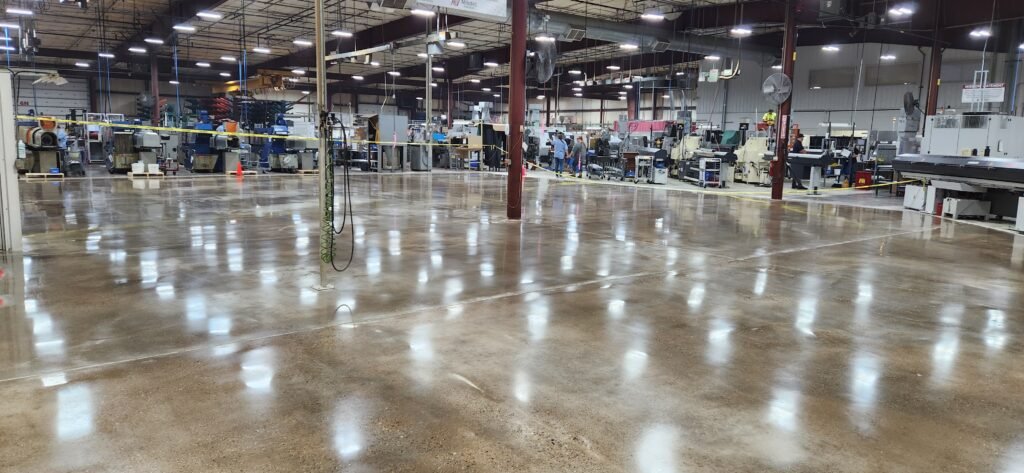
Commercial and Industrial Concrete Polishing in Wisconsin
Professional Concrete Polishing for Wisconsin Businesses
Concrete polishing transforms existing concrete floors into durable, low-maintenance polished concrete flooring with a smooth, attractive finish. WISE provides commercial and industrial concrete polishing throughout Wisconsin for warehouses, manufacturing facilities, retail spaces, showrooms, churches, and other high-traffic environments.
Our process combines diamond grinding, concrete densification, progressive polishing, and protective treatments to create a flooring system designed around your facility’s traffic, appearance, and maintenance requirements.
Table of Contents
Benefits of Concrete Polishing
Concrete polishing offers far more than an attractive finish. For commercial and industrial facilities, it provides a durable, cost-effective flooring solution that improves the appearance, performance, and longevity of existing concrete. Whether you’re upgrading a warehouse, manufacturing facility, retail space, or commercial building, polished concrete delivers long-term value with minimal maintenance.
Increased Durability
The concrete polishing process strengthens the surface through mechanical grinding and chemical densification, creating a floor that resists abrasion, heavy foot traffic, forklifts, and daily wear. This added durability helps extend the life of your concrete while reducing the need for costly repairs.
Lower Maintenance Costs & Long Term Savings
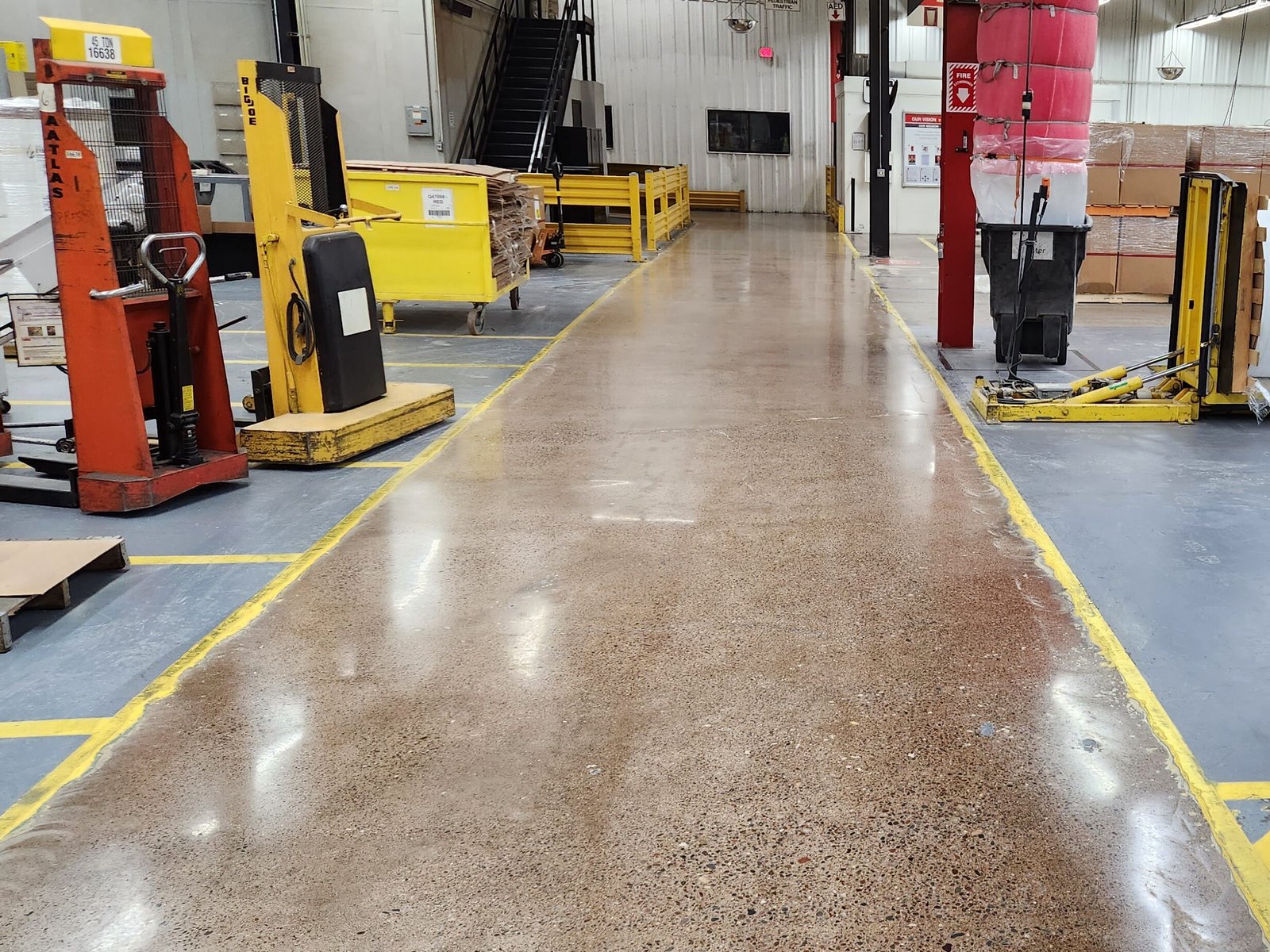
Unlike many flooring systems that require waxing, stripping, or periodic recoating, polished concrete is easy to maintain. Routine cleaning with an auto scrubber and a neutral cleaner is typically all that’s needed to keep the floor looking its best, helping reduce long-term maintenance costs and downtime. Polished concrete often provides one of the lowest lifecycle costs of any commercial flooring option. Its durability, low maintenance requirements, and long service life help businesses save money over time compared to flooring systems that require regular replacement or refinishing.
Improved Appearance
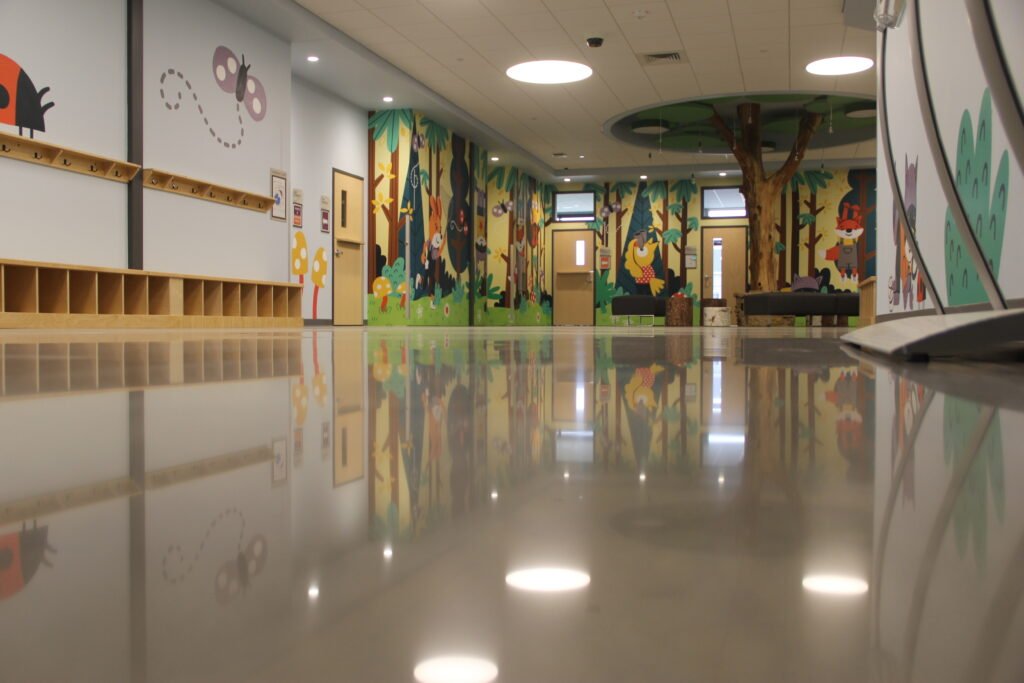
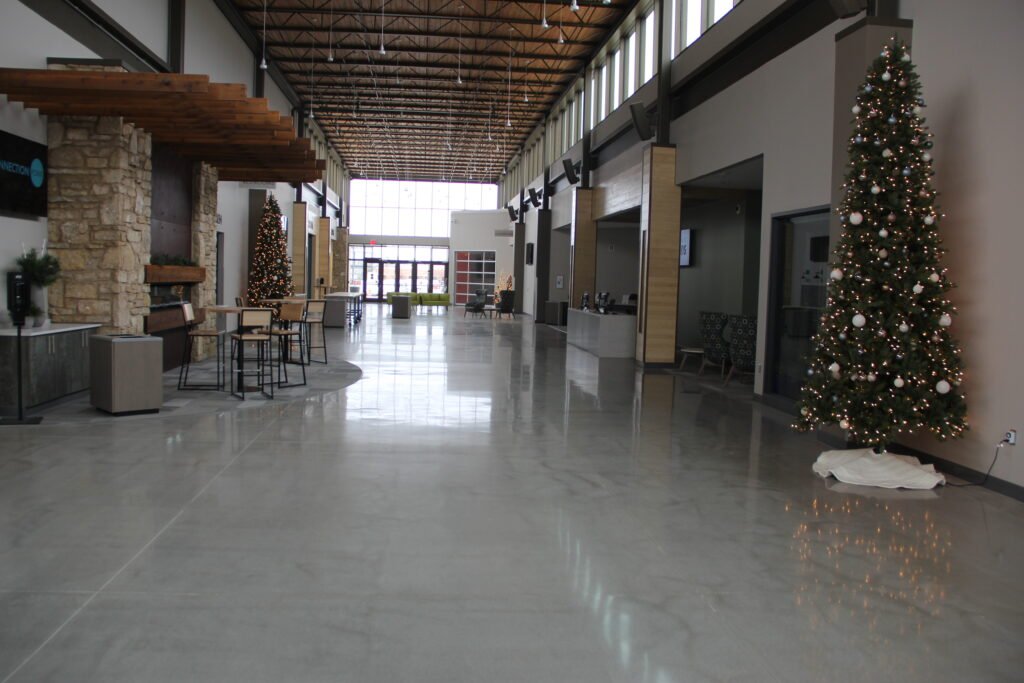
Polished concrete transforms dull, worn concrete into a clean, professional-looking surface. Depending on your desired finish, we can achieve anything from a subtle satin sheen to a high-gloss finish that enhances the appearance of your facility and leaves a positive impression on employees, customers, and visitors.
Dust Reduction
Untreated concrete can produce dust as the surface wears over time. During the polishing process, a concrete densifier hardens the surface, reducing dusting and helping maintain a cleaner indoor environment for employees, equipment, and inventory.
Better Light Reflectivity
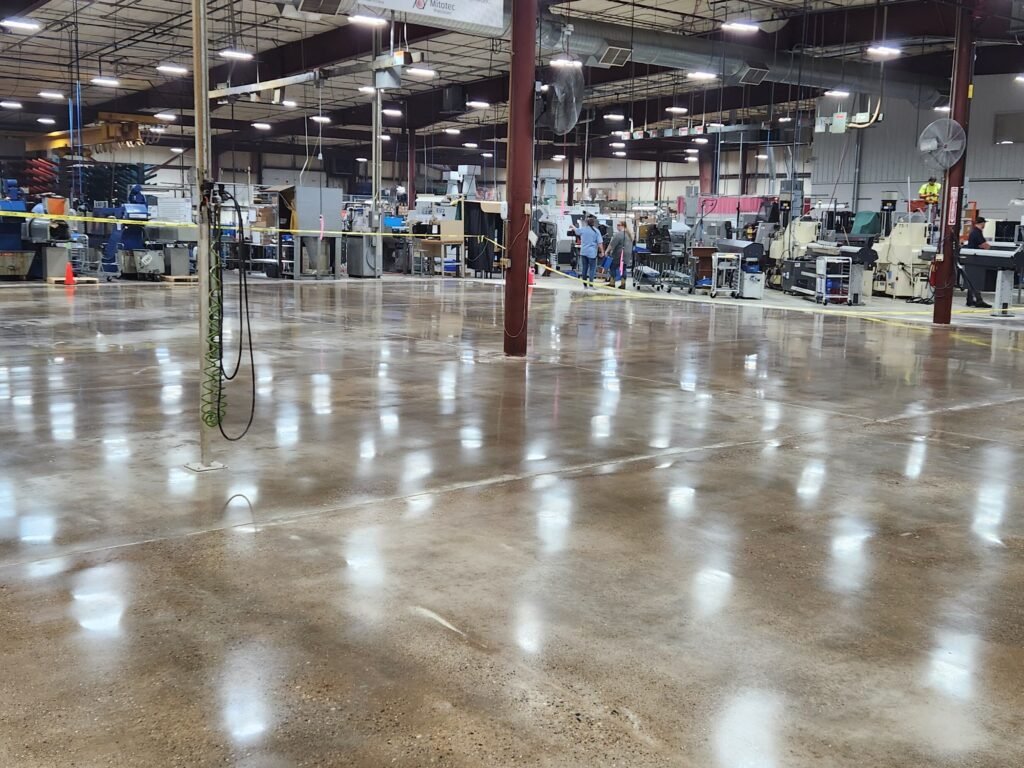
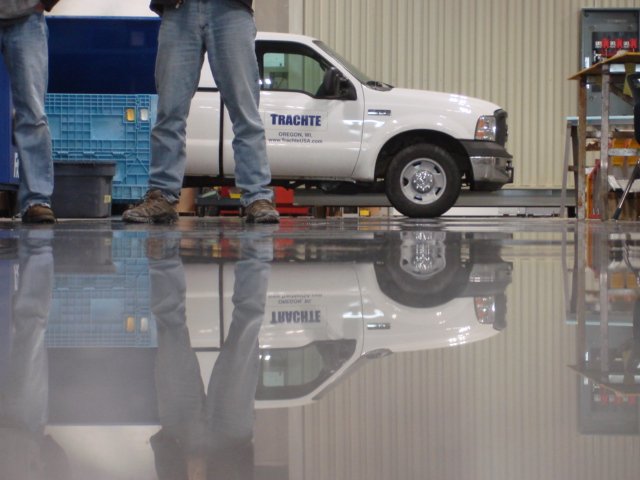
Highly polished concrete reflects more natural and artificial light throughout your facility, creating a brighter work environment. Increased reflectivity can improve visibility and may help reduce lighting costs in large commercial and industrial spaces.
Sustainable Flooring Solution
Concrete polishing utilizes your existing concrete slab, eliminating the need for additional flooring materials in many applications. Its long service life and reduced maintenance requirements make it an environmentally responsible choice for many commercial and industrial facilities.
Customizable Finish
Every facility has different needs. We offer multiple levels of aggregate exposure and gloss, allowing you to choose a finish that matches your operational requirements, maintenance goals, and aesthetic preferences. From practical warehouse floors to high-end commercial showrooms, polished concrete can be customized to fit your space.
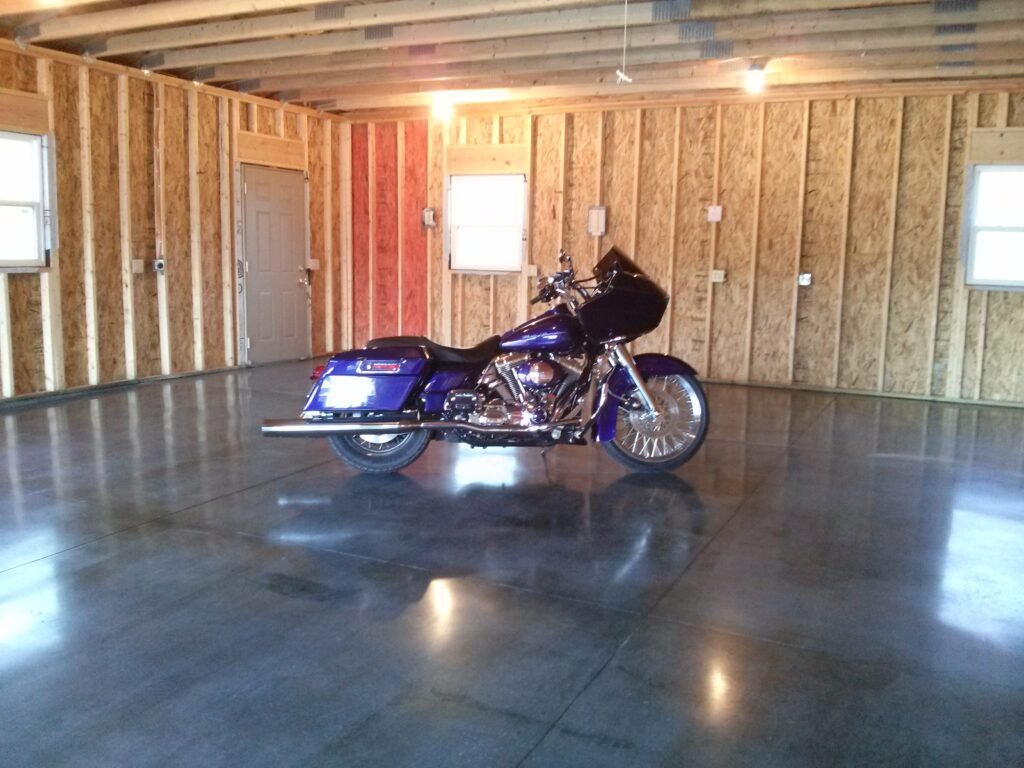
Ready to Experience What Polished Concrete Has to Offer?
Contact us for a free estimate.
Our Concrete Polishing Process
Contractors are unlikely to utilize the same equipment, tooling, chemicals/materials, and processes. Because of that, the buyer receives different quotations and results for concrete polishing. When a buyer decides which contractor to use, they should consider that not all floors are polished the same or last a long time. The following is how we approach each floor:
Surface Evaluation
Each floor is different and can require different processes and tooling to effectively polish the floor. If a floor is old and worn, or has a coating on it, it may require lower grit diamond tooling to start the process. The hardness of the concrete can also be checked to determine which type of metal bond diamond will be most effective (hard, medium, or soft).
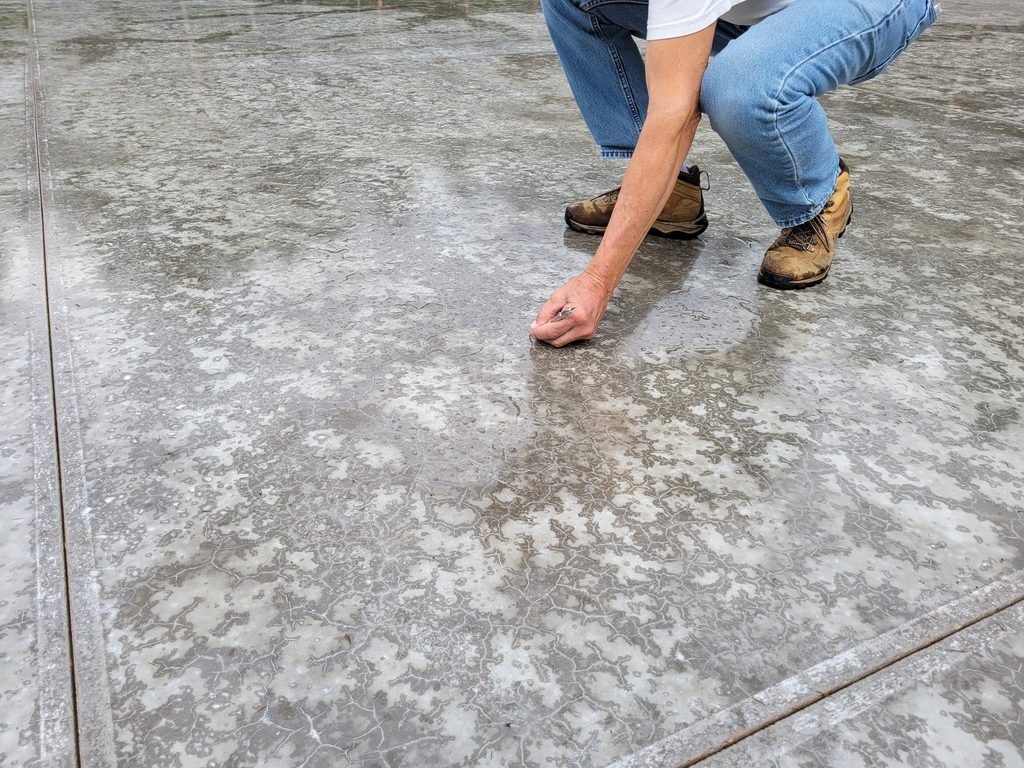
Additionally, the floor will be checked for expansion joints, holes, or cracks that may need to be filled in with a polyurea mixture before beginning, as well as possible floor anomalies that may interfere with grinding such as metal studs embedded in the floor. After the floor has been thoroughly examined and a plan created, we then move onto the next step of concrete preparation.
Concrete Preparation
Expansion joints, holes, and cracks that were noted in the evaluation step will be filled with a polyurea mixture that is intended to fill any faults in the concrete and allows for our polishing machines to give a more level polish and reduce chipping of the concrete. Anomalies such as floor studs will then be either removed or punched into the floor to rid them of interfering with the grinding steps.
Any large debris will be removed from the floor and thrown away. The proper diamond tooling will be attached to the grinding machines and the machines will be set up at the start of the grinding area. They will then be attached with a large hose to an industrial vacuum to help with dust collection.
Grinding
We begin the grind with 80 grit metal diamonds, or 40 grit if the floor is really rough. This is the most important step as it lays the foundation for every step afterwards. It also opens up the surface of the concrete so that the densifier that is applied later can penetrate deeper into the concrete. The floor is then vacuumed to remove most of the excess dust and debris.
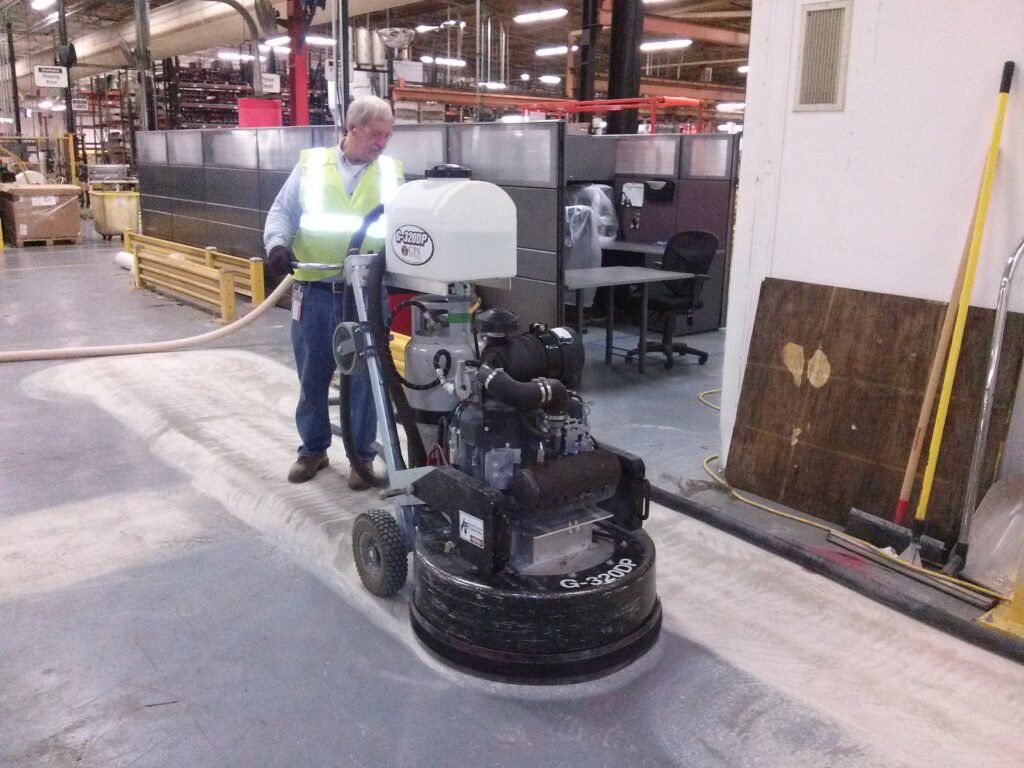
We then move onto grinding with 100 grit ceramic diamonds which help to erase any scratches that may have been made with the previous grind and further polish the floor. After the grind is completed, we vacuum the floor to pickup any leftover dust or residue to allow the densifier to permeate the floor unhindered.
Densifier Application
The densifier application fills in the pores of the concrete to strengthen the floor and help to alleviate dusting and movement of moisture that may weaken the concrete. If the level of polish desired is a basic shine, then the densifier can be applied after the 80 grit step is done and then finished with the 100 grit grind. Otherwise, the densifier is applied after the 100 grit step for any polish stopping at higher than 100 grit.
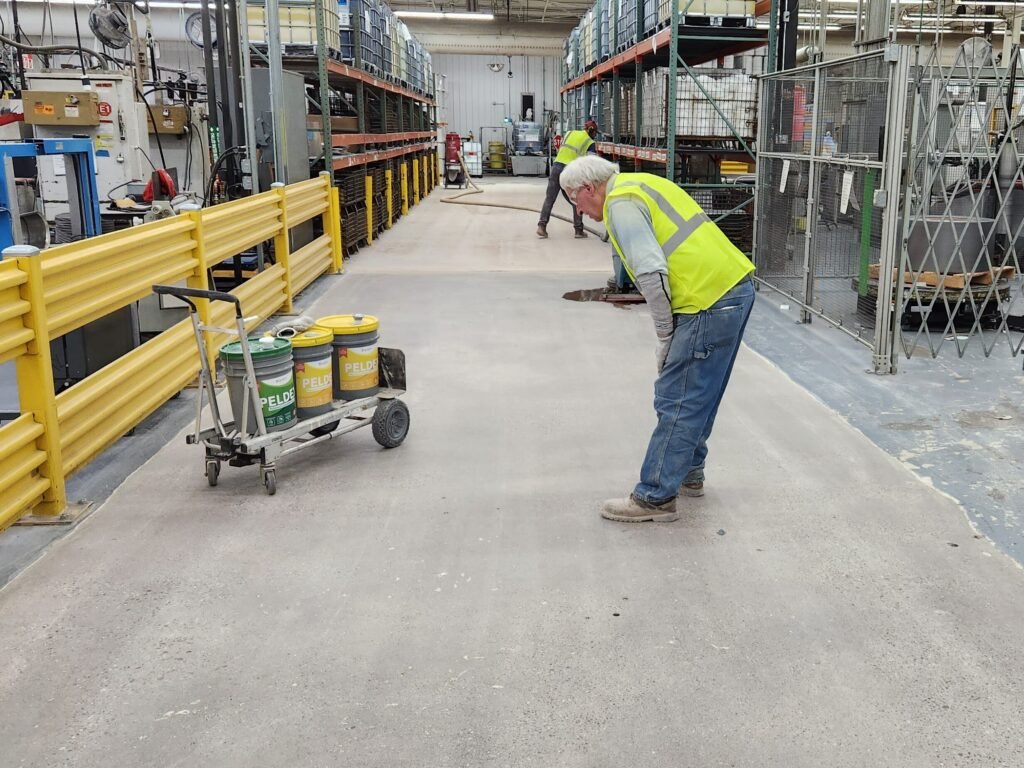
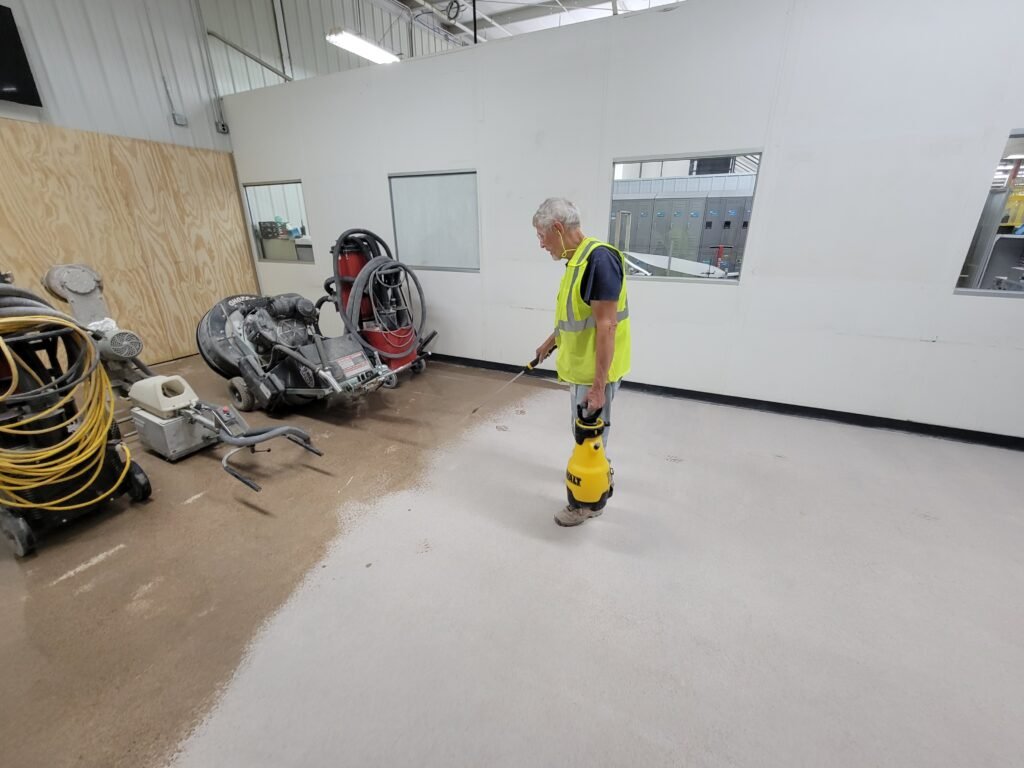
The densifier is sprayed on the floor using a pump sprayer and is made to cover the whole floor so that every area is wet. We then wait at least thirty minutes for the densifier to soak into the floor before continuing on with the polish. If any dry spots show up during this time, we add additional densifier to ensure that the whole surface is wet for at least thirty minutes.
Polishing
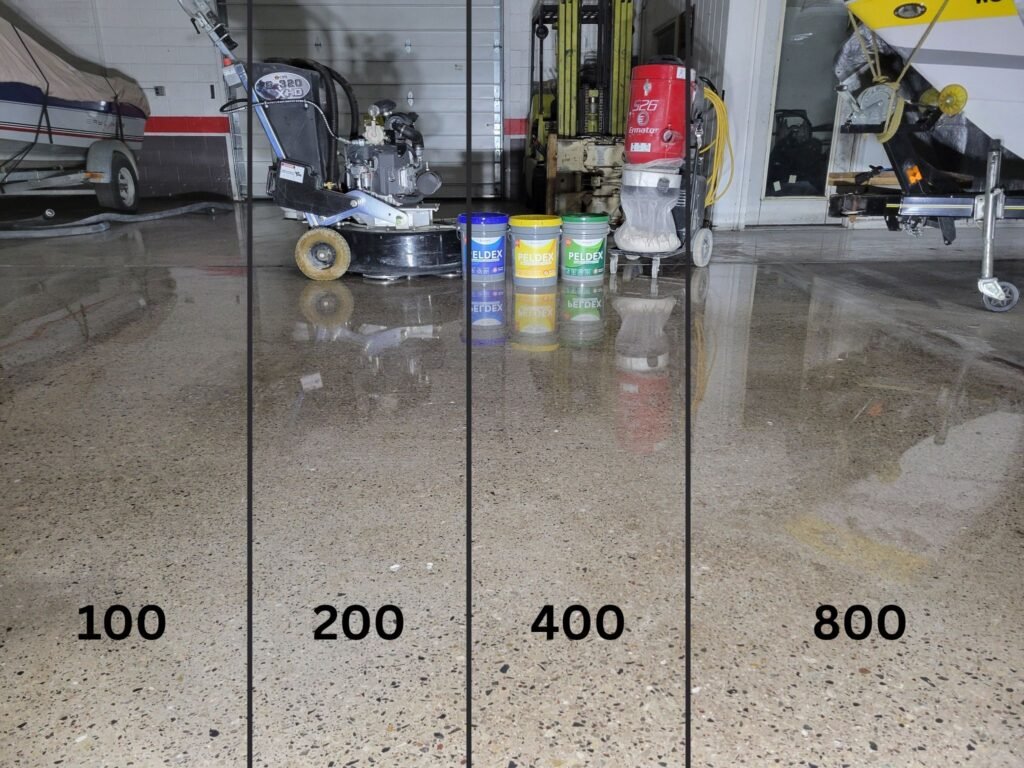
After the densifier has dried. We begin the polishing step which involves polishing the floor with the concrete grinders and diamond tooling in an ascending order to the desired level of polish. For a grind and seal and a subtle seen, we polish to 100 grit and then apply the guard. For a grind and shine and a slightly reflective floor, we polish to 200 grit. For a semi-gloss finish and a noticeable reflective floor, we polish to 400 grit. And for a high gloss finish and highly reflective floor, we polish to 800 grit. As the grit levels get higher, the finish of the floor becomes smoother and more reflective.
Guard Application
Once the concrete polishing is completed to the desired level, then the concrete guard is applied. The guard is used to provide additional protection to the floor. It adds chemical resistances, stain resistances, makes the finish more reflective, and makes the floor easier to clean and maintain. The guard is applied by a pump sprayer with equal amounts water and is spread by a microfiber mop to evenly coat the surface.
The surface is then allowed to dry for 30 min to 2 hours depending on ventilation and temperature. Once the guard is dry, then an additional coat is applied. Depending on floor quality, a third coat may added for a better shine and thicker protection barrier. Once the final coat is dry, the floor is run over with a high speed burnisher to heat up the guard and enhance the shine.
Final Inspection
This is when we perform the final inspection to ensure that the floor has been properly cleaned and there are no left over debris or markings.
Polished Concrete vs. Concrete Coatings
Both polished concrete and concrete coatings are excellent flooring solutions, but the right choice depends on your facility’s needs.
| Feature | Polished Concrete | Concrete Coatings |
|---|---|---|
| Best For | Warehouses, retail spaces, offices, and manufacturing facilities | Facilities requiring chemical resistance, decorative finishes, or waterproof protection |
| Maintenance | Low maintenance with routine cleaning | Easy to clean but may require periodic recoating |
| Appearance | Natural concrete with a satin to high-gloss finish | Unlimited color and decorative options |
| Durability | Outstanding for heavy traffic and daily wear as well as heat, salt, and hot tire marks | Excellent protection against chemicals, impacts, and abrasion |
Looking for a more detailed comparison? Visit our Polished Concrete vs. Concrete Coatings guide to learn which flooring system is the best fit for your facility or learn more about Concrete Coatings on our concrete coatings page down below.
What Affects the Final Appearance of Polished Concrete?
The final appearance of a polished concrete floor depends on several factors, including the condition and hardness of the existing concrete, the level of aggregate exposure, the quality of the diamond tooling and products used, and the desired level of polish. Existing cracks, repairs, coatings, and uneven areas can also affect the final appearance.
Because every concrete floor is different, we evaluate the slab before beginning work and determine the appropriate grinding, polishing, densification, and protective treatment process for the project.
Why Use Us?
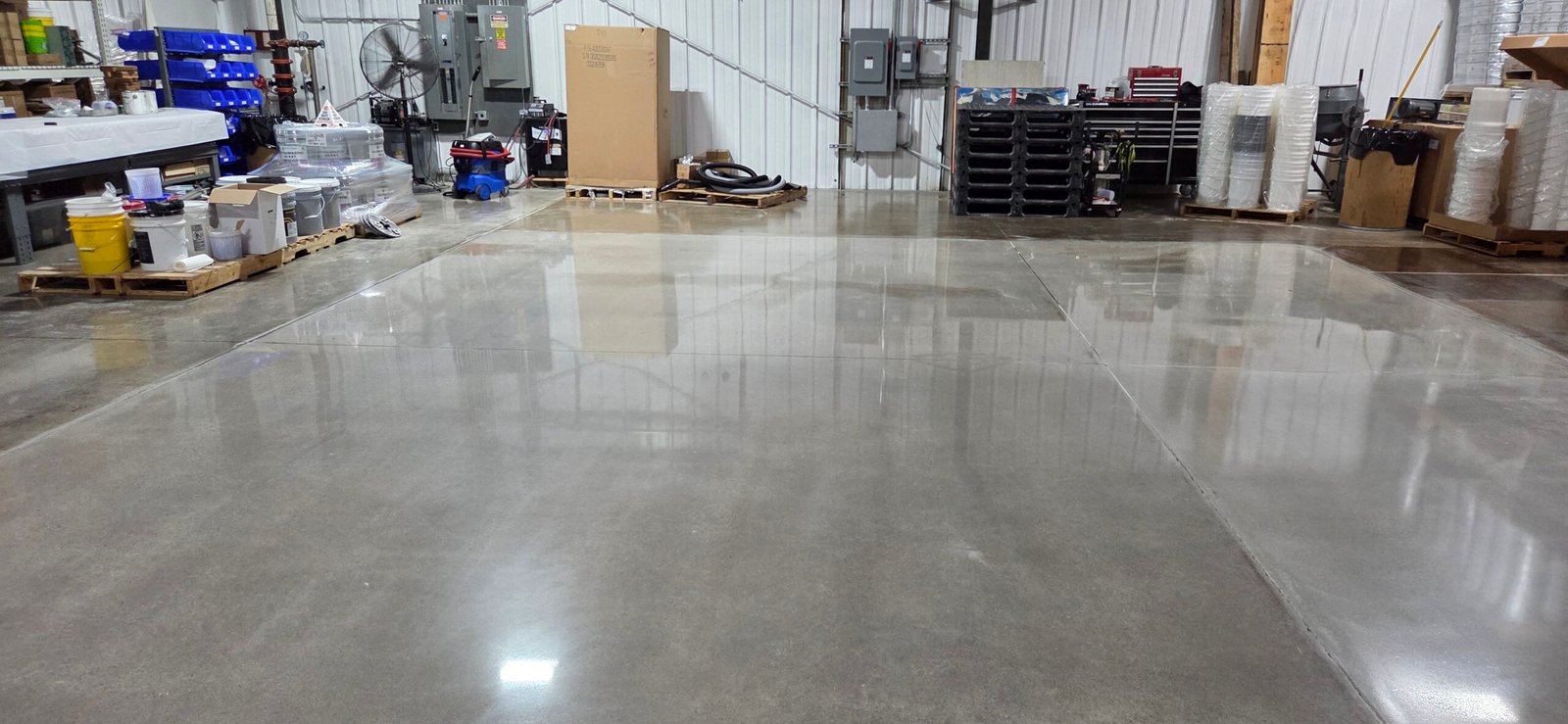
Along with over 25 years of experience in the concrete polishing and coating industry, what sets us apart is our use of top of the line products that lead to a more durable, lustrous, and resistant floor. We use the Peldex line because after so many years in the industry, these products have consistently produced the best results whether that’s longevity, luster, or durability. Click the button below to learn more about the products we use to create quality floors.
Areas We Service
Dane County
We service all of Dane County which includes Madison, Sun Prairie, Middleton, Verona, and Fitchburg. Learn more about our services in Dane County on our Madison concrete polishing page.
Eau Claire County
We service all of Eau Claire County which includes Eau Claire, Altoona, Chippewa Falls, Lake Hallie, Menomonie, and Washington. Learn more about our services in Eau Claire County on our Eau Claire concrete polishing page.
Milwaukee County
We service all of Milwaukee County which includes Wauwatosa, West Allis, Brookfield, Waukesha, Oak Creek, Franklin, and Menomonee Falls. Learn more about our services in Milwaukee County on our Milwaukee concrete polishing page.
Other Areas
We service most of Wisconsin including Sauk County, Jefferson County, Dodge County, La Crosse County, Brown County, and others. Learn more about where we service on our Service Area page.
What Does Polished Concrete Look Like?
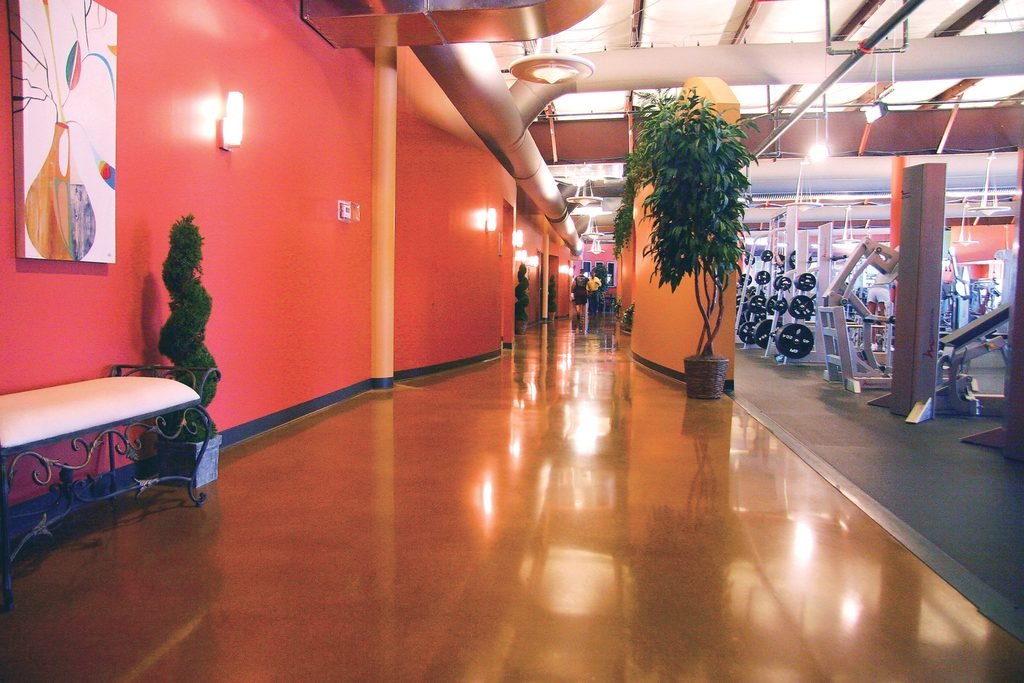
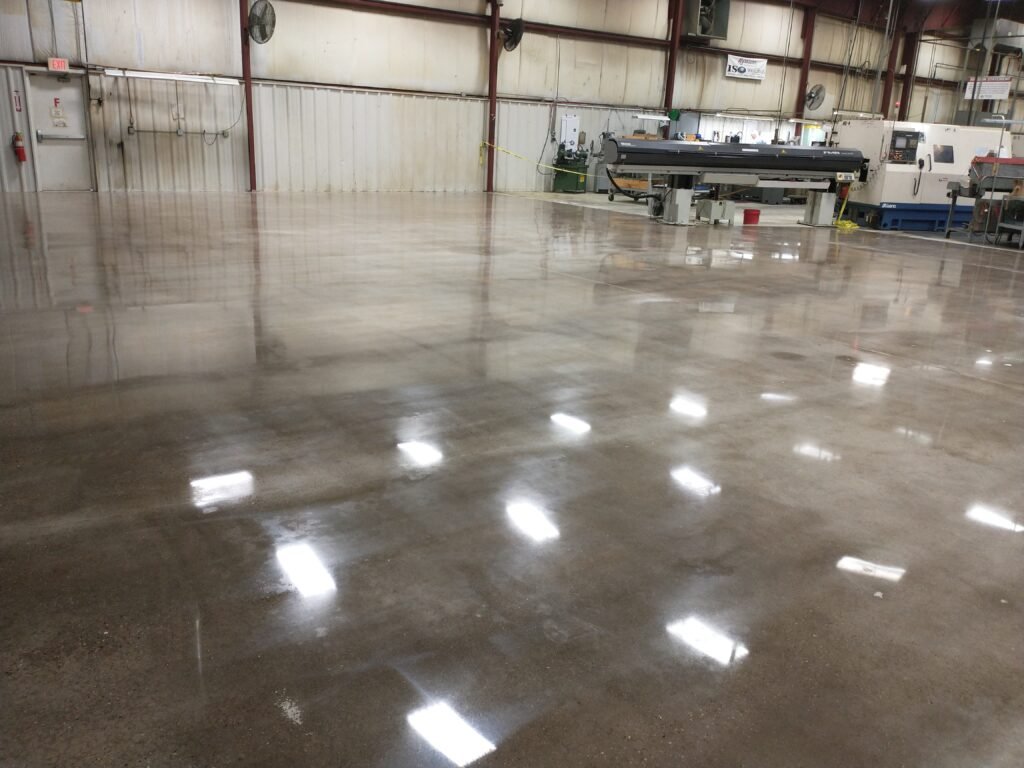
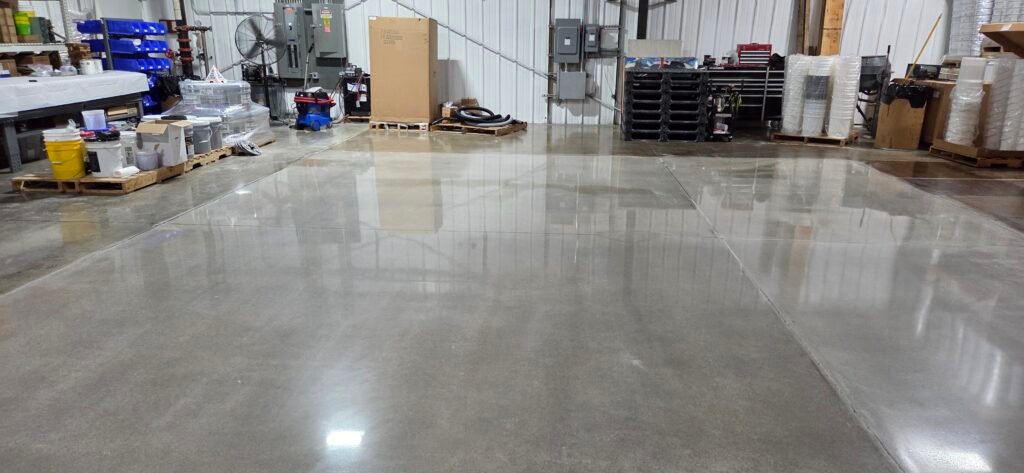
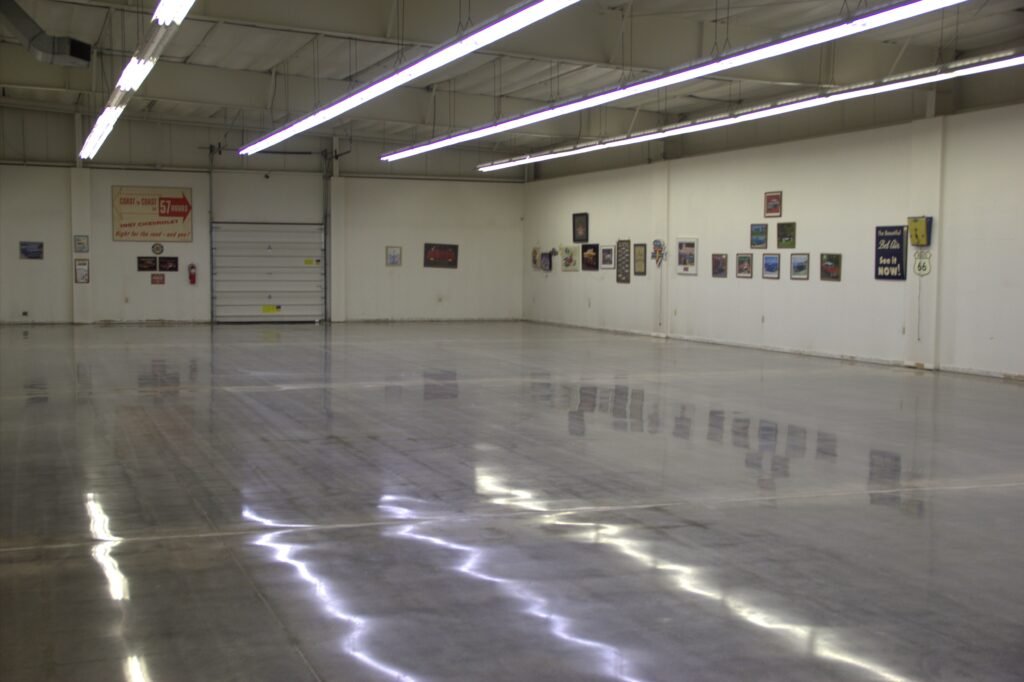
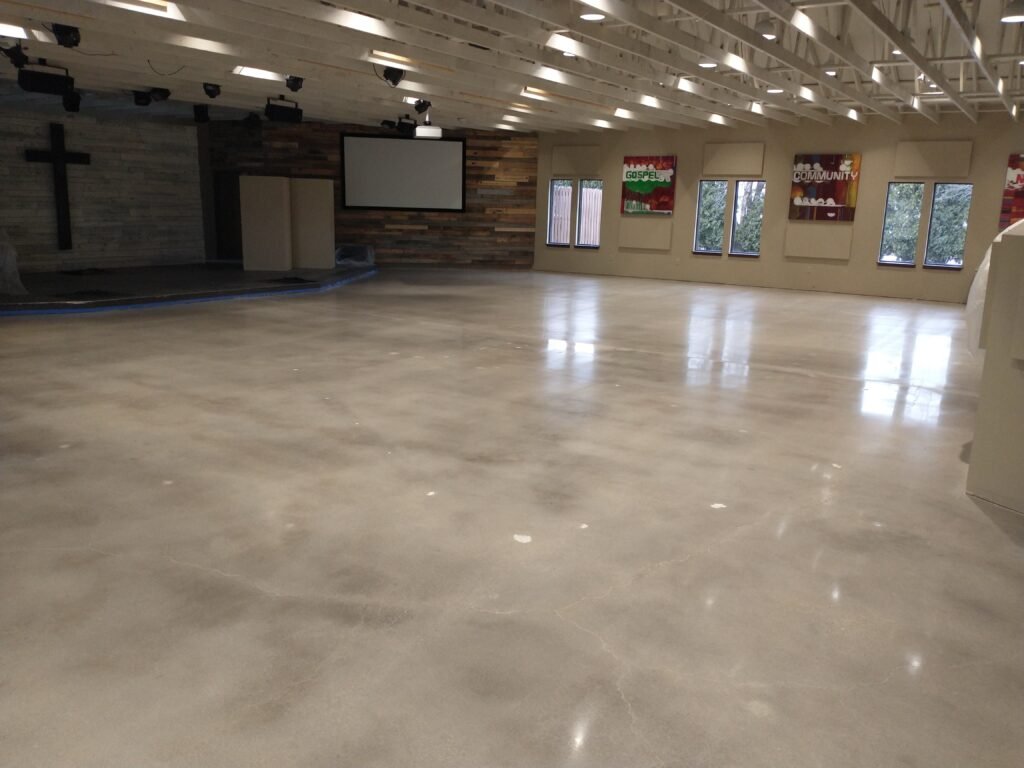
Here are a few close ups of different polished concrete floors.
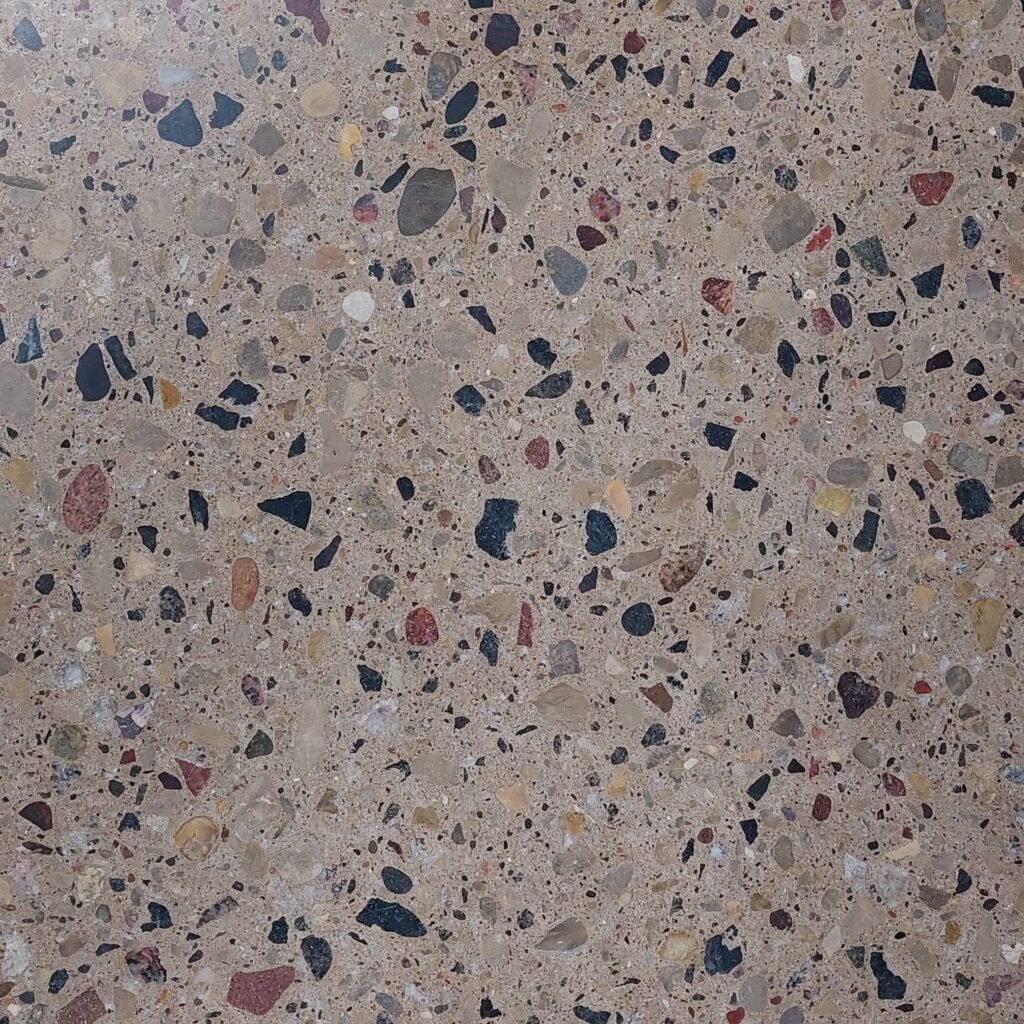
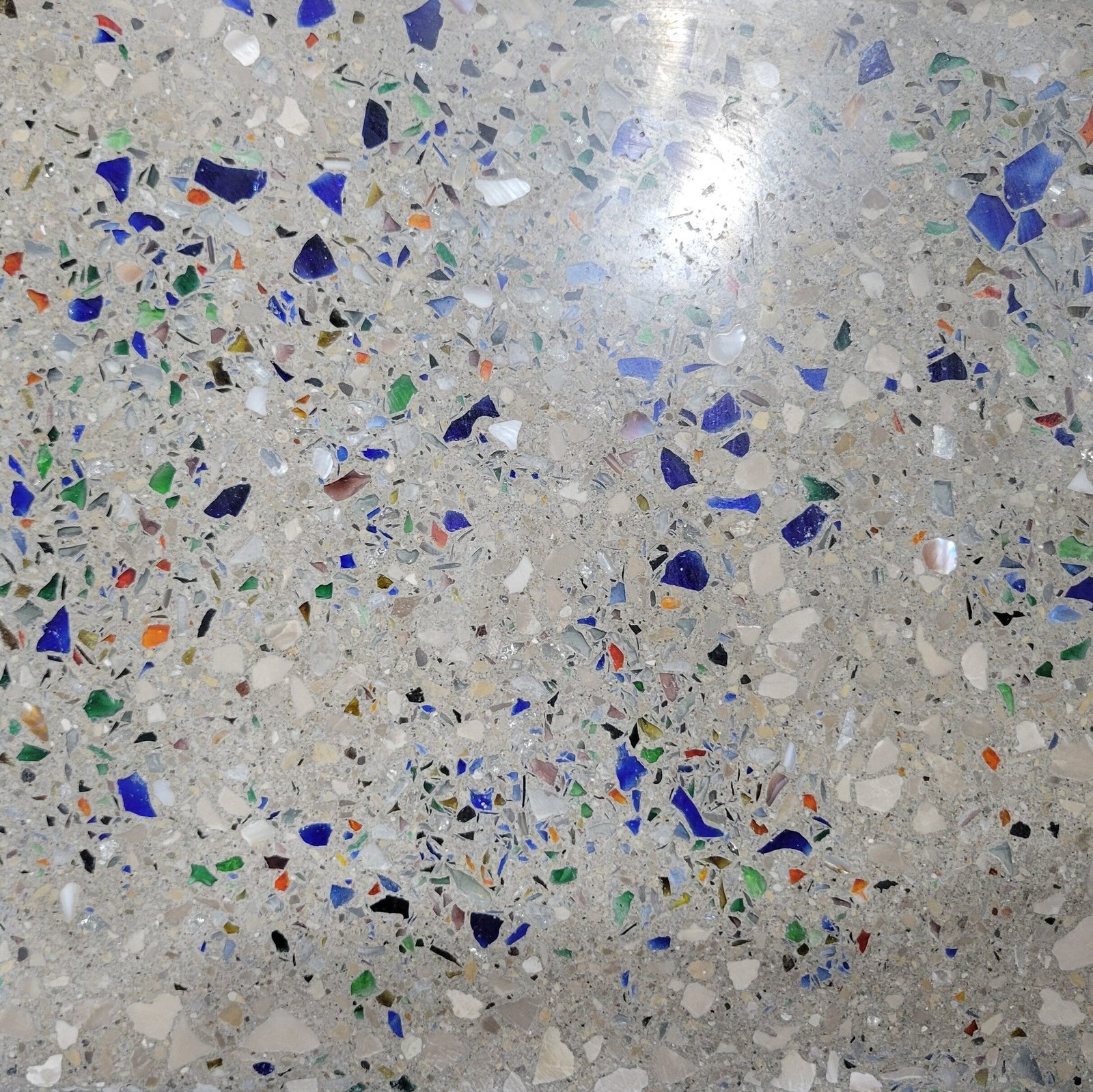
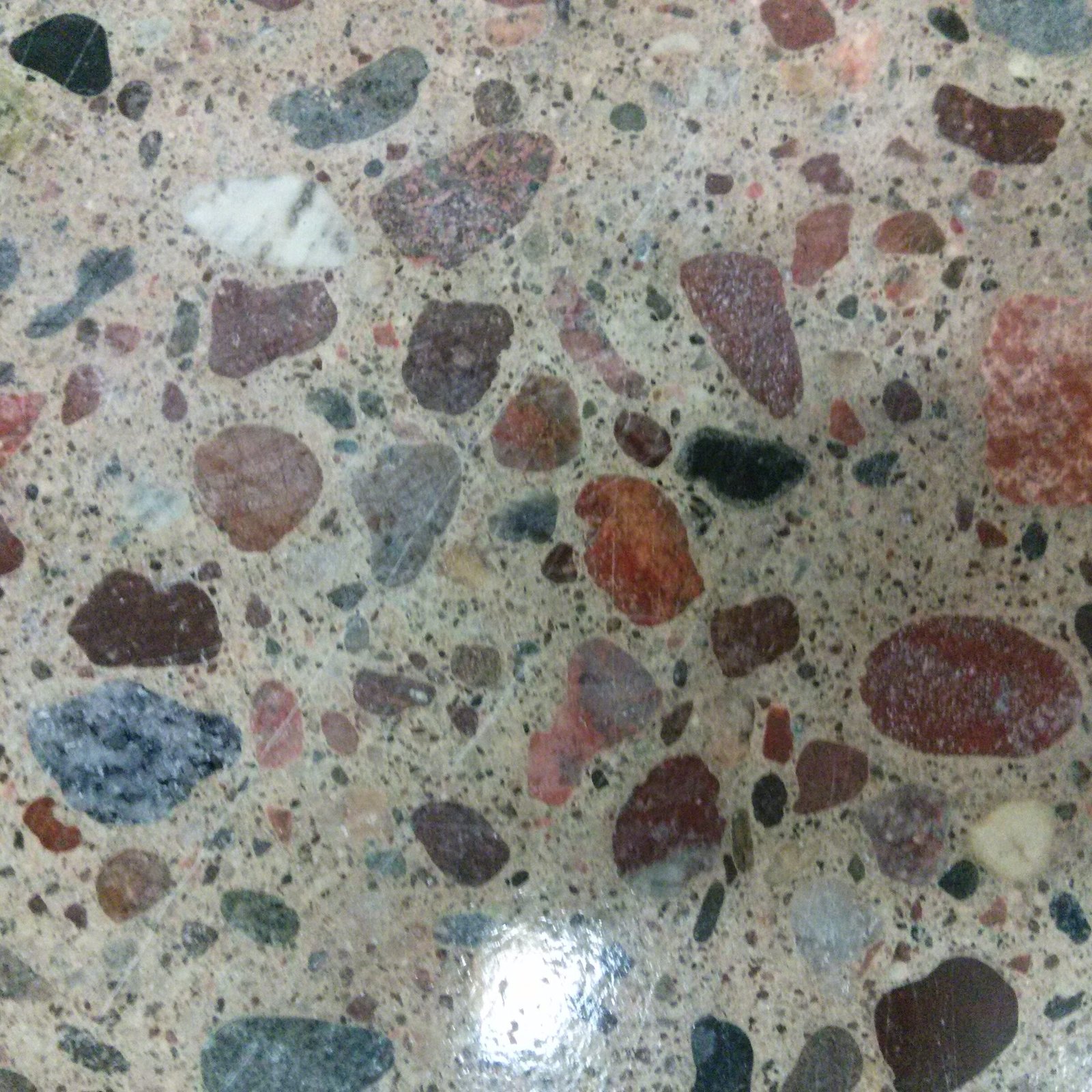
As you can see there is quite a bit of variety in the final look of the floor and these are influenced by the depth of the cut which affects aggregate size, additives which can add items to enhance the natural look of the floor such as colored glass, type of aggregate used in initial pour which affects shapes and colors of aggregate, and the concrete guards used that help enhance the floors shine. Let us know what you are looking for and we can give you ideas as to what may be the best solution for you.

FAQs
What is polished concrete?
Polished concrete is a mechanical grinding and polishing process that transforms ordinary concrete into a durable, low-maintenance, and attractive flooring surface. Using progressively finer diamond abrasives, the concrete is refined to achieve the desired level of shine and performance.
How long does polished concrete last?
Properly installed and maintained polished concrete can last decades. Unlike coatings that may peel or wear away, polished concrete becomes part of the slab itself, making it highly durable for commercial and industrial environments.
How do polished concrete floors compare to concrete coatings?
Polished concrete becomes part of the concrete slab and typically requires less maintenance than coatings. Because polished concrete becomes a part of the slab, it lasts about as long as the slab does while coatings wear away over time. Coatings systems can provide additional chemical resistance and decorative options. We help customers determine which system best fits their application.
Can existing concrete be polished?
In many cases, existing concrete can be polished if it is structurally sound. However, the older the concrete is, the more grooves, stains, and low spots there tend to be which can lead to an uneven looking floor. Our team evaluates each floor to determine whether polishing is the best solution or if repairs are needed first.
Is polished concrete slippery?
Despite its glossy appearance, polished concrete can provide excellent slip resistance when kept clean and dry. Its smooth surface also reduces dust accumulation and improves overall cleanliness. However, when wet, polished concrete can become very slippery. That’s why we usually don’t recommend it for areas that tend to get wet frequently like garages.
What grit levels of polished concrete do you offer?
We offer polishing levels ranging from 100 grit to 800 grit. The specialized densifiers and guards we use give a nice shine even at 100 grit but we can go to 800 grit if a high gloss is desired. We help customers choose the best finish based on their facility’s needs and budget.
How much does concrete polishing cost?
Concrete polishing generally costs between $3 and $8 a square foot, depending on desired level of polish, obstructions, any coating removal, hardness of concrete, and other possible factors.
Ready to Enhance Your Floor?
Give us a call, text, or email and we will be sure to give you the best option for your floor.