
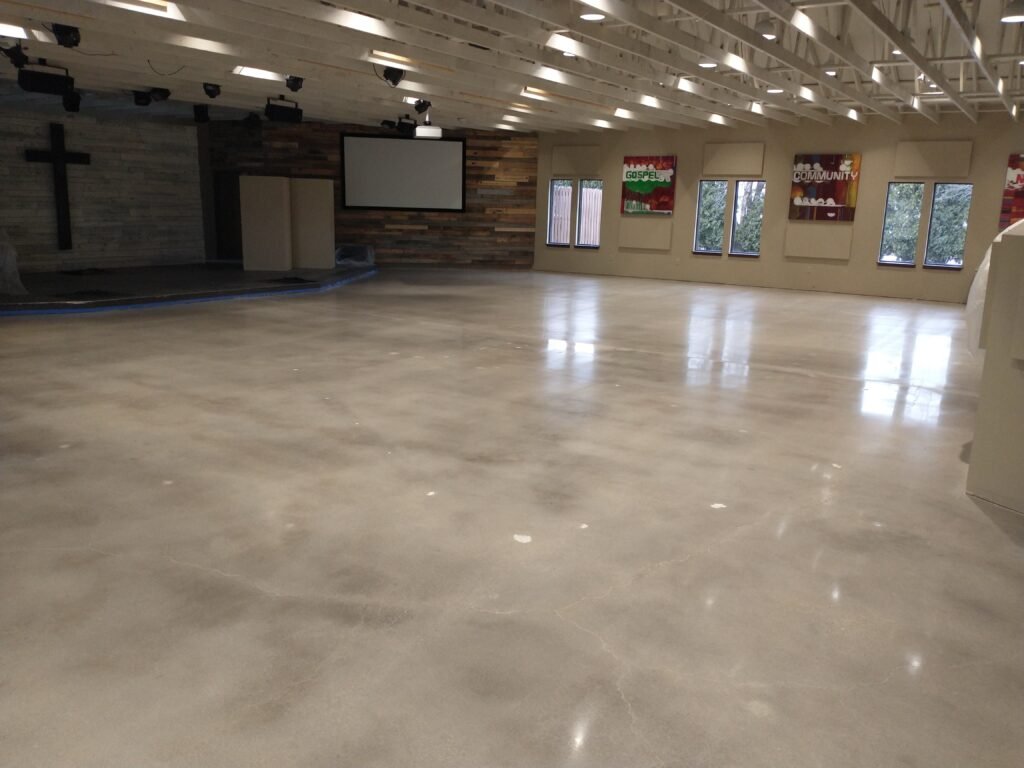
Restore Worn, Damaged & Deteriorating Floors
Commercial and industrial floors take a tremendous amount of abuse. Heavy foot traffic, forklifts, equipment, spills, chemicals, dirt, and years of wear can leave a floor stained, scratched, dull, or difficult to maintain.
When a floor begins to show its age, replacement isn’t always necessary.
WISE provides professional floor restoration services designed to improve the appearance, durability, and performance of existing concrete and other hard flooring surfaces.
Depending on the condition of your floor, restoration may include industrial floor cleaning, concrete grinding, polishing, protective treatments, coatings, or other surface restoration techniques.
We evaluate the condition of your floor and recommend the most appropriate approach for your facility.
Table of Contents
What Is Floor Restoration?
Floor restoration is the process of improving an existing floor rather than completely replacing it.
The appropriate restoration method depends on the type and condition of the floor.
A worn concrete floor may benefit from mechanical grinding and polishing. A heavily contaminated industrial floor may require professional cleaning before additional restoration can take place. Other floors may benefit from a protective treatment or coating system.
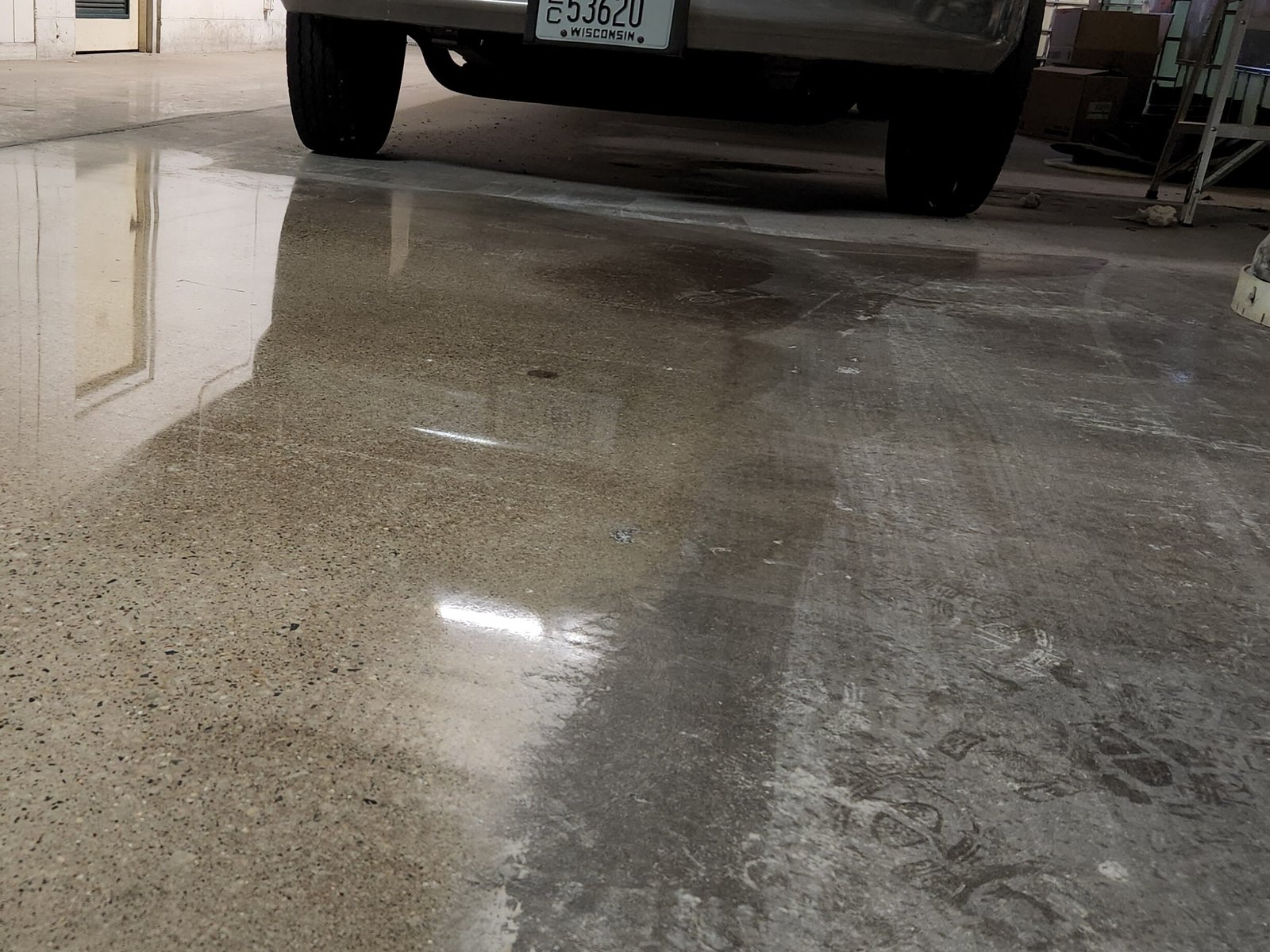
Our approach is simple:
Evaluate the floor → Identify the problems → Determine the appropriate solution → Restore and protect the surface
Common Floor Problems We Can Address
Over time, commercial and industrial floors can develop a variety of problems.
Surface Wear
Constant foot traffic, forklifts, vehicles, and equipment can gradually wear down a concrete floor.
Staining & Contamination
Oil, grease, chemicals, dirt, and other contaminants can leave floors heavily stained and difficult to clean.
Scratches & Abrasion
Heavy equipment and traffic can create scratches, scuffs, and other surface damage.
Concrete Dusting
Weak or porous concrete can produce dust that becomes a maintenance problem and can affect the cleanliness of a facility.
Dull or Worn Appearance
Concrete and other hard floors can lose their original appearance after years of use.
Surface Deterioration
Older floors may develop areas of deterioration, exposed aggregate, or other surface defects.
Failing Coatings or Sealers
Old coatings and sealers can wear out, peel, discolor, or become difficult to maintain.
Our Floor Restoration Services
There isn’t one restoration process that works for every floor. We use different techniques depending on the condition and requirements of the surface.
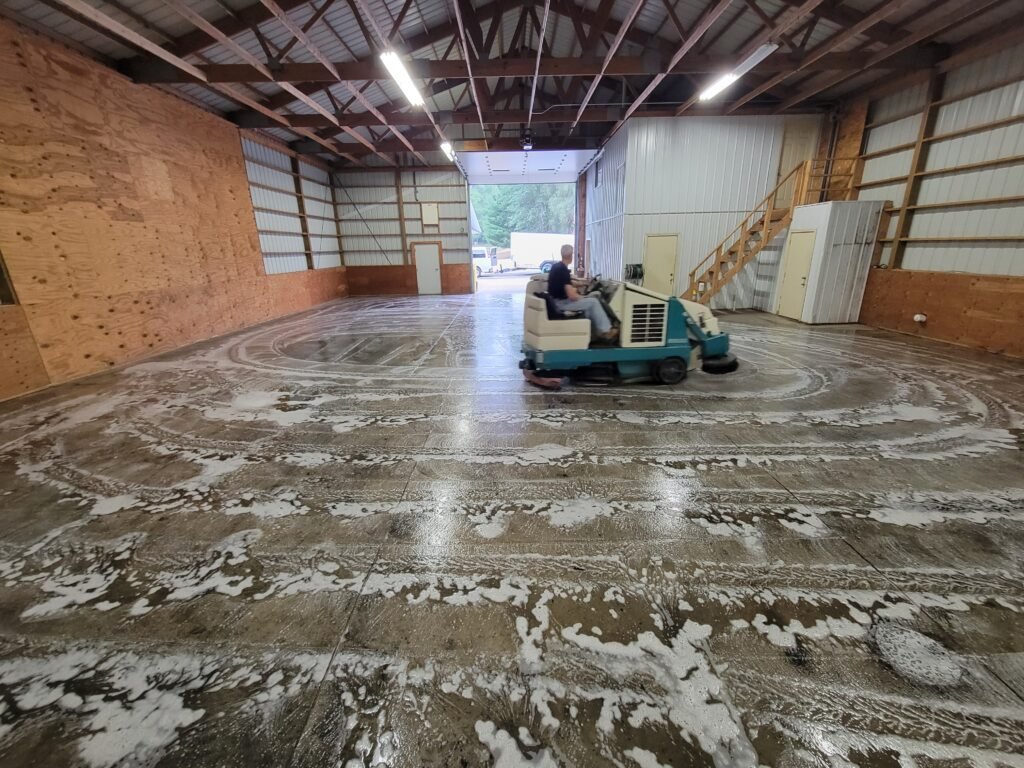
Industrial Floor Cleaning
Heavy dirt, oil, grease, and other contaminants may need to be removed before a floor can be properly evaluated or restored.
Our industrial floor cleaning services can help remove accumulated contaminants and restore a cleaner, more manageable surface.
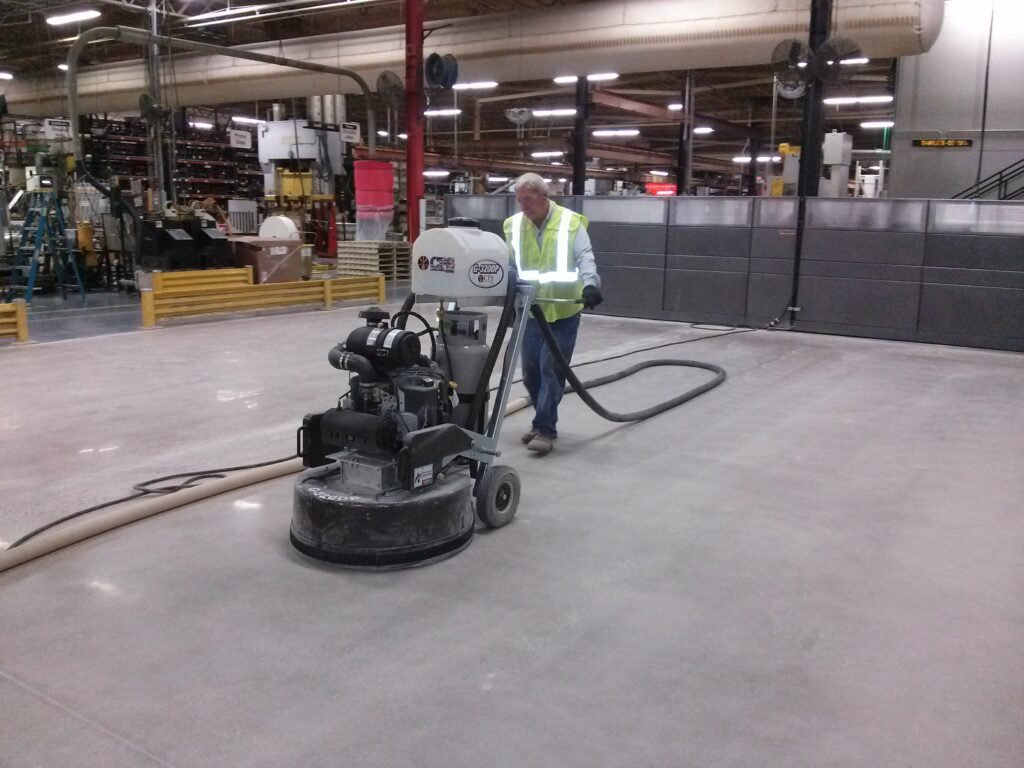
Concrete Grinding
Grinding uses diamond tooling to mechanically remove surface imperfections and prepare concrete for further restoration.
Depending on the floor, grinding can help address:
- Surface damage
- Old coatings
- Staining
- Uneven areas
- Surface buildup
- Minor imperfections
Grinding can also be the first stage of a complete polished concrete restoration system.
Concrete Polishing
Polishing uses progressively finer diamond abrasives to refine the concrete surface and create a smooth, durable finish.
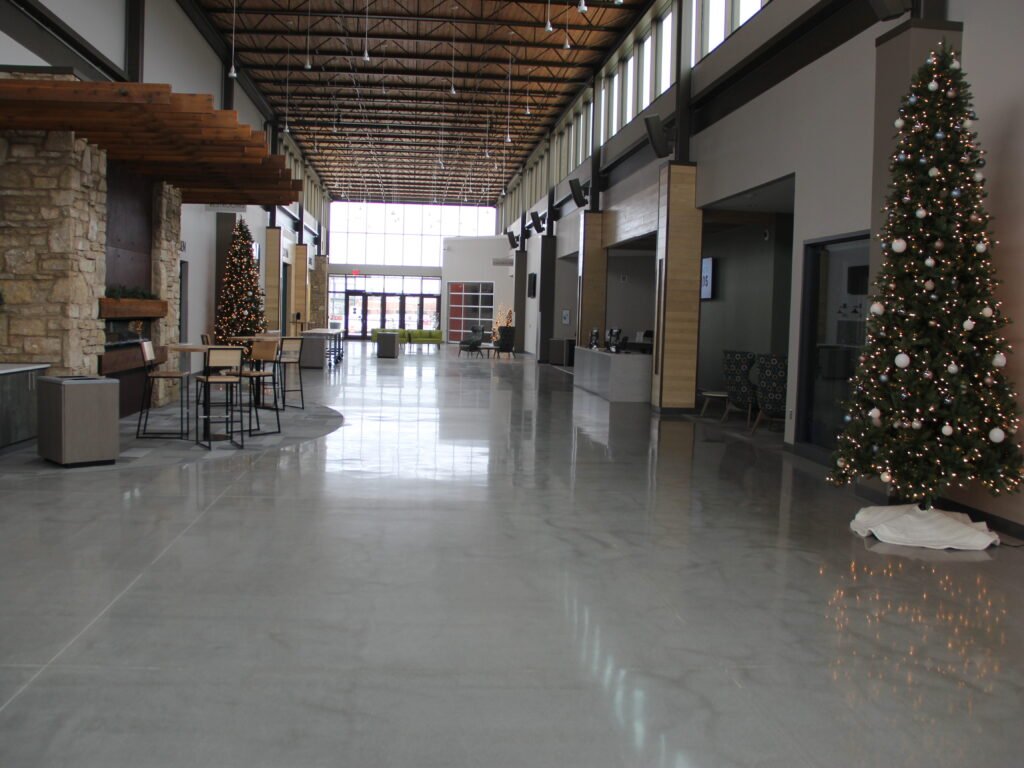
Polishing can improve:
- Appearance
- Smoothness
- Reflectivity
- Cleanability
- Surface durability
It can be an excellent option for existing concrete floors that are structurally sound but have become dull or worn.
Protective Concrete Treatments
Once a floor has been restored, protective treatments can help improve its long-term performance.
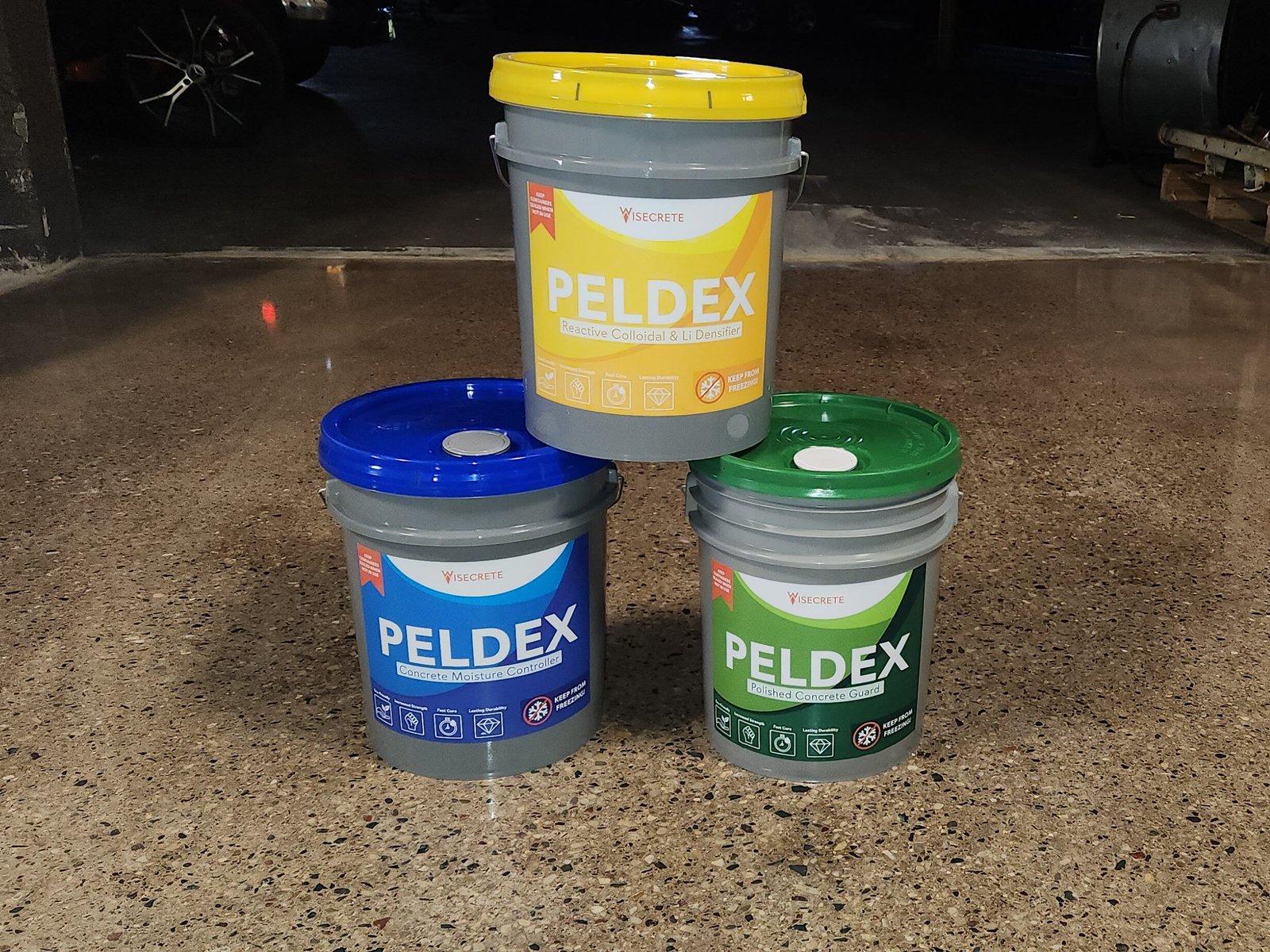
Depending on the application, treatments may include penetrating concrete densifiers and protective topical guards.
Densifiers can help increase surface hardness and reduce dusting, while protective guards can provide additional resistance to staining and everyday wear.
Concrete Coatings
Some floors require more protection than polishing or sealing can provide.
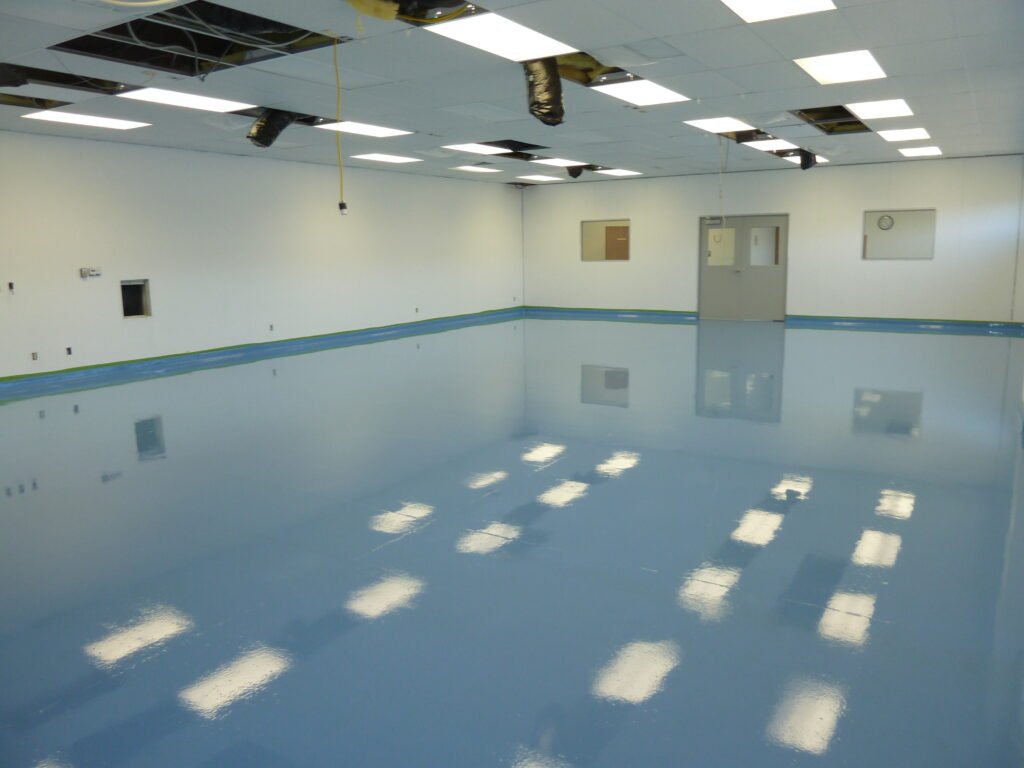
Concrete coating systems can create a more substantial protective surface and may be appropriate for floors exposed to heavy traffic, chemicals, abrasion, or other demanding conditions.
Depending on the application, coatings can also provide decorative options such as color and aggregate finishes.
Terrazzo Polishing & Restoration
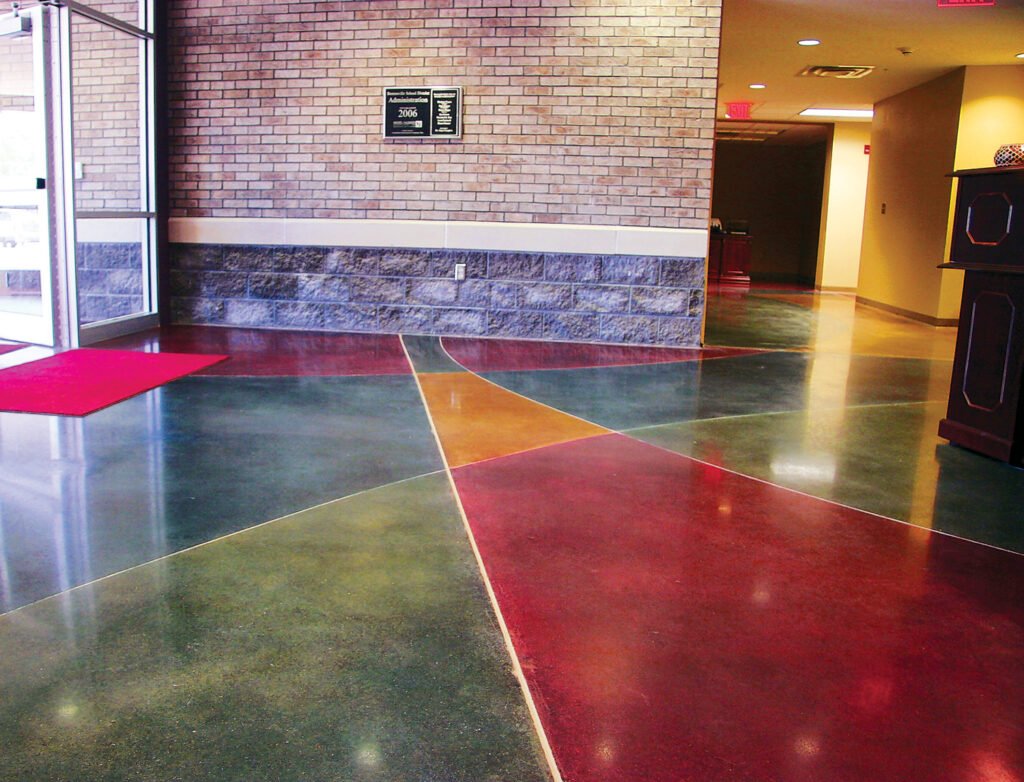
Terrazzo floors can often be restored rather than replaced.
Our terrazzo restoration process may include grinding, honing, polishing, stain removal, repairs, and protective treatments depending on the condition of the existing floor.
Our Floor Restoration Process
Every restoration project is different, but our general process begins with understanding the existing floor and what you need it to accomplish.
1. Evaluate the Existing Floor
We inspect the floor to identify its condition and determine the problems that need to be addressed.
We consider:
- Floor type
- Surface condition
- Traffic levels
- Existing coatings or treatments
- Staining and contamination
- Damage and deterioration
- Desired appearance
- Maintenance requirements
2. Determine the Best Restoration Method
Once we understand the condition of the floor, we determine which restoration methods make the most sense.
Depending on the project, this could include:
Cleaning → Grinding → Polishing → Densification → Protective Treatment
or:
Surface Preparation → Coating Application
Some projects may require only one treatment, while others benefit from a combination of processes.
3. Prepare the Surface
Proper preparation is one of the most important parts of a successful restoration project.
Preparation may include cleaning, mechanical grinding, removal of existing coatings, or other methods depending on the floor.
4. Restore the Floor
We perform the selected restoration process using professional equipment and diamond tooling where appropriate.
Our goal is to address the underlying condition of the floor rather than simply covering up the problem.
5. Protect the Finished Surface
Depending on the restoration system, we may apply a densifier, protective guard, sealer, or coating to help protect the finished floor.
6. Final Inspection
After the restoration process is complete, we inspect the finished surface and make sure it meets the requirements of the project.
When Should You Consider Floor Restoration?
You may want to consider professional floor restoration if your floor:
- Has become difficult to clean
- Produces excessive concrete dust
- Has significant staining
- Looks dull or worn
- Has scratches or surface damage
- Has an aging or failing coating
- Experiences heavy traffic
- Needs improved protection
- Is becoming a maintenance problem
- Looks worse than it did when it was installed
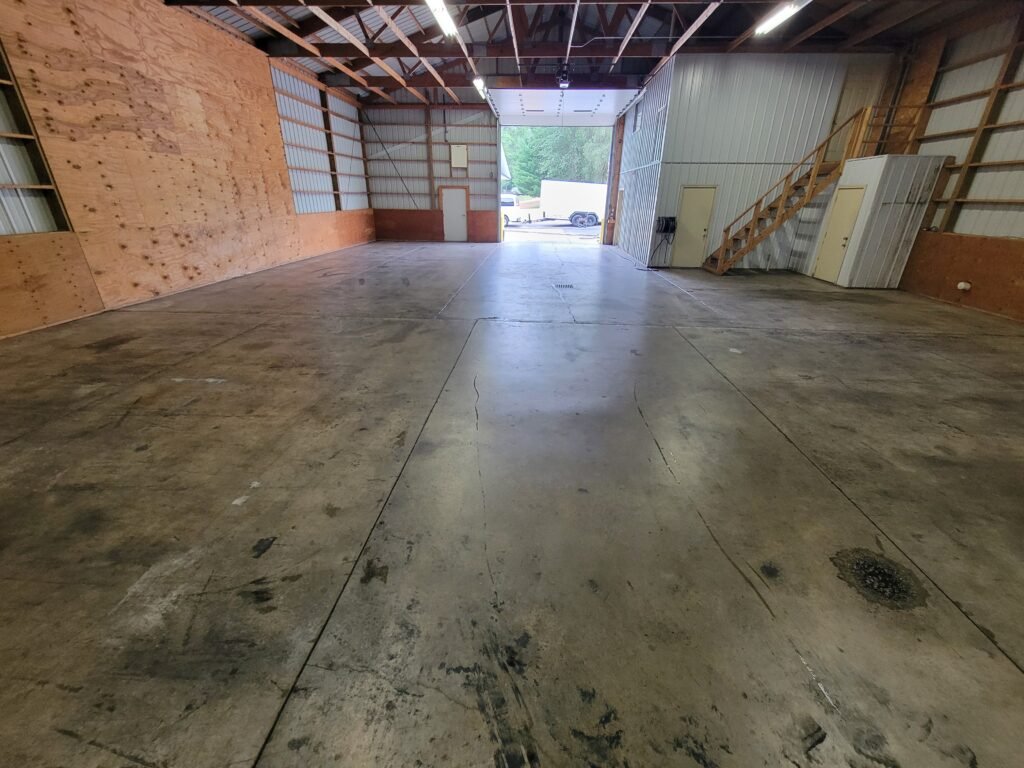
Restoration may be especially worthwhile when the underlying floor is still structurally sound.
Floor Restoration vs. Floor Replacement
When a floor is worn or damaged, replacement isn’t necessarily the only option.
| Floor Restoration | Floor Replacement |
|---|---|
| Uses the existing floor | Removes existing flooring |
| Can reduce demolition | Requires demolition and disposal |
| Usually less expensive | Can be very expensive |
| May minimize downtime | Can require extended downtime |
| Preserves existing concrete | Requires new flooring |
| Can improve appearance and performance | Provides an entirely new surface |
| Often less disruptive | Typically more disruptive |
The right choice depends on the condition of the existing floor.
If the underlying floor is structurally sound, restoration may provide a practical alternative to replacement.
Benefits of Professional Floor Restoration
Extend the Life of Your Existing Floor
Restoration can help bring worn floors back into service and potentially extend their useful life.
Improve Appearance
Grinding, polishing, cleaning, and other restoration processes can dramatically improve the appearance of worn surfaces.
Make Floors Easier to Maintain
A properly restored and protected floor can be easier to clean and maintain.
Reduce Disruption
Restoring an existing floor can sometimes be less disruptive than removing and replacing the entire flooring system.
Address the Underlying Surface
Instead of simply covering an existing problem, mechanical restoration can address the surface itself.
Protect Your Investment
Maintaining an existing floor can help you get more value from the original concrete or flooring system.
Commercial & Industrial Floor Restoration
Our floor restoration services are designed for environments where floors need to withstand regular use and remain functional.
Manufacturing Facilities
Restore floors exposed to heavy equipment, vehicle traffic, spills, and everyday industrial wear.
Warehouses & Distribution Centers
Improve worn concrete floors used by forklifts, pallet jacks, and other material-handling equipment.
Automotive Facilities
Restore floors affected by vehicle traffic, oil, grease, and other automotive contaminants.
Retail & Commercial Buildings
Improve the appearance and maintainability of worn concrete and terrazzo floors.
Schools & Institutional Facilities
Restore high-traffic flooring while minimizing unnecessary replacement.
Why Choose WISE?
25+ Years of Experience
We’ve been serving Wisconsin businesses for more than 25 years and understand the challenges associated with maintaining commercial and industrial floors.
Multiple Restoration Solutions
We don’t rely on a single restoration method.
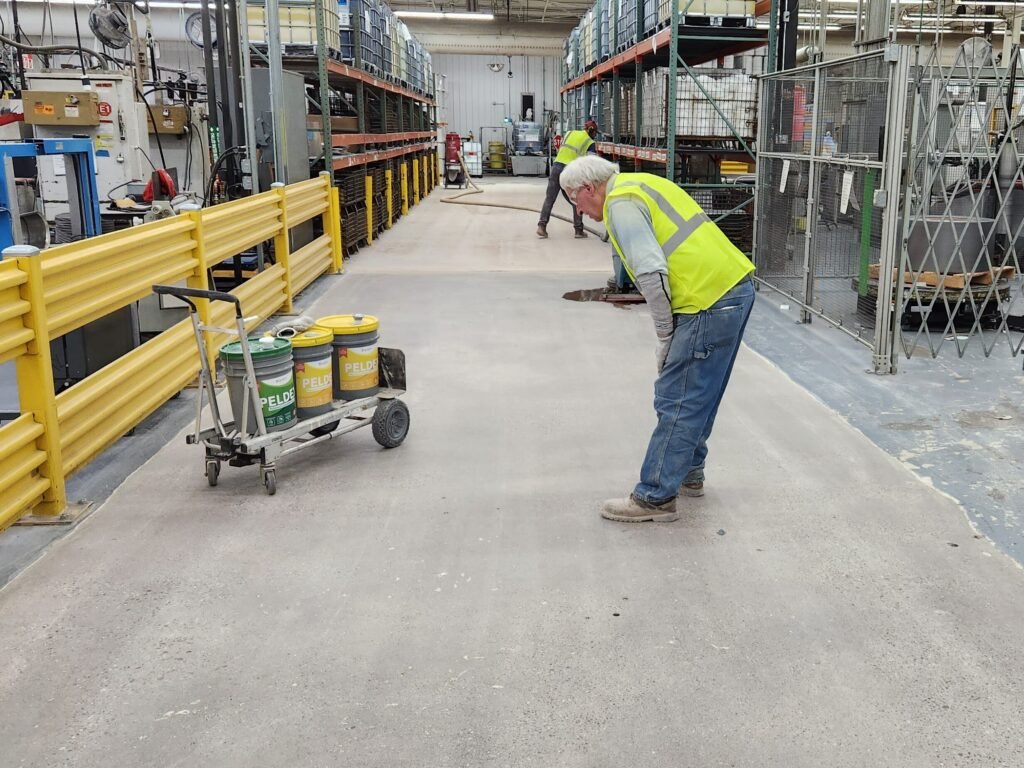
This allows us to evaluate the floor as a whole and determine which solution makes the most sense.
Restoration Before Replacement
When possible, we look for ways to restore and improve the existing floor rather than automatically recommending replacement.
Wisconsin Service
We provide commercial and industrial floor restoration throughout Wisconsin, including Madison, Milwaukee, Eau Claire, La Crosse, and surrounding communities.
Frequently Asked Questions
What types of floors can you restore?
We specialize in concrete and terrazzo surfaces and can use different restoration methods depending on the condition and construction of the floor.
Can you restore severely stained concrete?
It depends on the type and depth of the staining. Professional cleaning, grinding, and other restoration methods can often improve heavily stained concrete, although some stains may remain.
Can you restore old concrete floors?
Yes. Older concrete can often be restored if the underlying floor is structurally sound and suitable for the selected restoration process.
Can you remove an old coating?
In many cases, existing coatings can be mechanically removed or prepared for a new system. The appropriate method depends on the type and condition of the existing coating.
Is floor restoration cheaper than replacement?
It can be, although costs vary significantly depending on the condition and size of the floor and the amount of preparation and restoration required.
How long does floor restoration take?
Project duration depends on floor size, condition, restoration method, preparation requirements, and the desired finish.
Can floor restoration be performed while a facility is operating?
In many situations, restoration can be planned around your facility’s schedule to minimize disruption. The options depend on the type of work and operating conditions.
How do I know which restoration process my floor needs?
The best way to determine the appropriate solution is to evaluate the existing floor. We can assess its condition and recommend whether cleaning, grinding, polishing, protective treatments, coatings, or another approach is appropriate.
Restore Your Floor Instead of Replacing It
A worn commercial or industrial floor doesn’t automatically need to be replaced.
The right restoration process can improve the appearance, durability, and maintainability of an existing floor while potentially extending its useful life.
Wise Concrete Polishing provides professional floor restoration services for businesses throughout Wisconsin.
Serving Madison, Milwaukee, Eau Claire, La Crosse, and communities throughout Wisconsin.